Updates
|
* AII 2026 Conference Venue: *
Address: West Building, Ground floor, Room 01 or Lounge (Dockland campus, University Way, London E16 2RD, UK)
Direction to Venue (pdf)
|
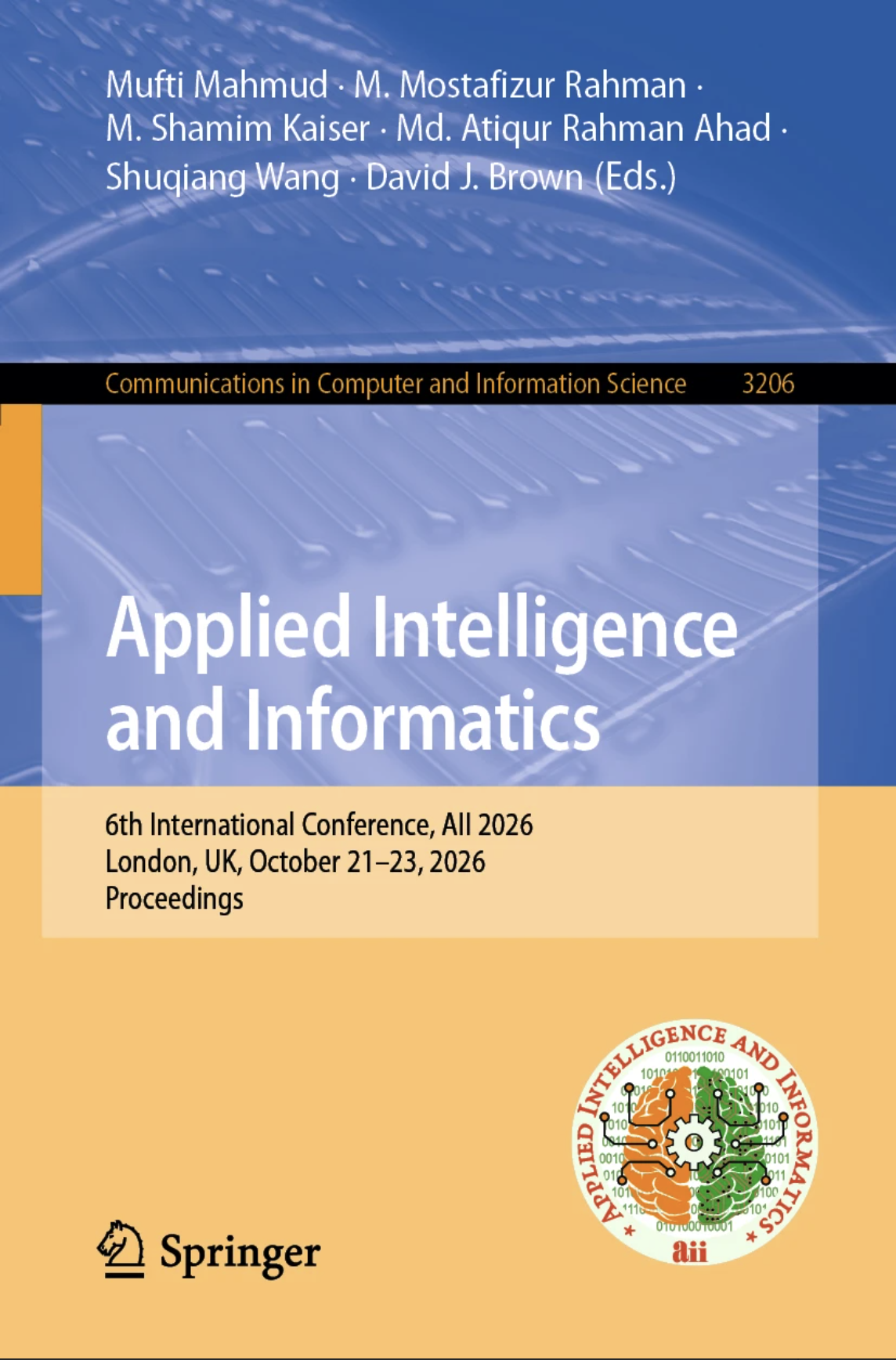
| Provisional AII 2026 Proceedings Available (Note: the actual conference proceedings will be published by Springer soon) |
|
|
About the Applied Intelligence and Informatics (AII) Conference
Intelligence is defined as the ability to perceive or infer information, and to retain it as knowledge to be applied towards adaptive behaviours within an environment or context. It can be the capacity for logic, understanding, self-awareness, learning, emotional knowledge, reasoning, planning, creativity, critical thinking, and problem-solving. Informatics is the study of the structure, behaviour, and interactions of natural and engineered computational systems. It studies the representation, processing, and communication of information in natural and engineered systems. Applying intelligence and informatics in solving most complex problems in science, engineering, real-life manufacturing, defence, management, government, and industrial domains.
The 6th International Conference on Applied Intelligence and Informatics (AII 2026) provides a premier international forum to bring together researchers and practitioners from diverse domains for the sharing of cutting-edge research results obtained through the application of intelligence and/or informatics to solve problems otherwise would not have been possible to solve. AII 2026 also fosters exchange and dissemination of innovative and practical development of methodologies and technologies with real-life applications.
AII 2026 aims to run in a competition format and asks all authors to make their dataset and methodology open access for the community usage. This is to: Foster the Reproducibility of Scientific Results, hence is the theme of the conference.
Keynote Speakers

Professor Sir Aziz Sheikh OBE
Pro-Vice-Chancellor, Head of Department and Nuffield Professor of Primary Care Health Sciences, University of Oxford, UK
Biography: Professor Sir Aziz Sheikh OBE is Nuffield Professor of Primary Care Health Sciences, Head of the Nuffield Department of Primary Care Health Sciences and Pro-Vice-Chancellor at the University of Oxford. He is Professorial Fellow at Harris Manchester College, University of Oxford and Honorary Consultant with the UK Health Security Agency and Public Health Scotland. He was previously Chair of Primary Care Research and Development, Director of the Usher Institute and Dean of Data at the University of Edinburgh. He has played important advisory roles to a number of governments, inter-governmental bodies, including the World Bank, World Health Organization and the World Innovation Summit for Health, and leading scientific bodies including the Academy of Medical Sciences and the Royal Society. Aziz has worked for over 25 years on digitising health systems, securely linking health and cross-sectoral data and then using these data to inform and influence health policy, improve the safety and quality of care, and develop personalised risk assessments. He has been awarded fellowships from 10 learned societies, including most recently the US’ National Academy of Medicine. Aziz was made an Officer of the Order of the British Empire for ‘Services to Medicine and Health Care’ in 2014 and a Knight Bachelor in 2022 for ‘Services to COVID-19 Research and Policy’.

Professor Jason Moore
Professor of Computational Biomedicine; Chair, Department of Computational Biomedicine; Cedars-Sinai Medical Center, USA
Biography: Dr. Jason Moore is Chair of the Department of Computational Medicine at Cedars-Sinai Medical Center where he serves as Director of the Center for Artificial Intelligence Research and Education. He leads an active research program focused on the development and application of AI algorithms for the analysis of biomedical data. Recent work focuses on methods for automated machine learning (AutoML) and agentic AI with a goal of democratizing AI in healthcare. He is an elected fellow of the American College of Medical Informatics, the American Medical Informatics Association, the International Academy of Health Sciences Informatics, and the American Statistical Association.
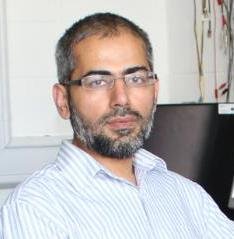
Professor Amir Hussain
Chair Professor of AI, King Fahd University of Petroleum and Minerals, Saudi Arabia
Biography: Prof. Amir Hussain is a Chair Professor of Artificial Intelligence at King Fahd University of Petroleum and Minerals (KFUPM) and a Visiting Professor of AI & Health at the University of Oxford. He holds a BEng with First-Class Honours and a PhD from the University of Strathclyde, UK. Previously, he served as a Professor of Trustworthy AI at Edinburgh Napier University. His research focuses on trustworthy AI, cognitive computing, and machine learning applications in healthcare. An internationally recognised academic leader, Prof. Hussain serves as Editor-in-Chief for Springer Nature book series, is an Associate Editor for several leading IEEE journals, and acts as an AI advisor to industry and governments.

Dr Islem Rekik
Associate Professor in Computing, Department of Computing, Imperial College London, UK
Biography: Dr. Islem Rekik is the Director of the Brain And SIgnal Research and Analysis (BASIRA) laboratory (http://basira-lab.com/) and an Associate Professor at Imperial College London (Innovation Hub I-X). She is the awardee of two prestigious international research fellowships (EU Marie Curie Fellowship & TUBITAK 2232). In 2025, she was the recipient of the prestigious “Tunisian AI Award” from the Tunisian AI Society (𝗧Λ𝗜𝗦), recognizing Top AI Pioneers and was featured in the I-X news as well as the Realites magazine. Together with BASIRA members, she conducted more than 100 cutting-edge research projects cross-pollinating AI and healthcare —with a sharp focus on brain imaging and network neuroscience. UG and PG Students under her supervision received 24 highly competitive academic honors, grants and awards. She is also a co/chair/organizer of more than 34 international first-class conferences/workshops/competitions (e.g., Affordable AI 2021-22, Predictive AI 2018-2025, Machine Learning in Medical Imaging 2021-25, WILL competition 2021-23). She delivered 40+ invited keynotes, talks, seminars and lectures including prestigious international conferences (MICCAI, CVPR, ISBI, Wellcome trust). She is a member of the organizing committee of MICCAI 2023 (Vancouver), 2024 (Marrakesh) and South-Korea (2025). She will serve as the General Co-Chair of MICCAI 2026 in Abu Dhabi. In addition to her 160+ peer-reviewed publications in top journals including IEEE TPAMI (IF: 20.8) and BMJ (IF: 93), she is a strong advocate of equity, diversity and inclusiveness in AI and research. She is the former President of the Women in MICCAI (WiM), and the co-founder (and now former President) of the international RISE Network to Reinforce Inclusiveness & diverSity and Empower minority researchers in Low-Middle Income Countries (LMIC).

Dr Timothy Rittman
Alzheimer's Research UK Senior Fellow, Senior Clinical Research Associate, University of Cambridge, UK
Biography: Timothy Rittman is an Alzheimer's Research UK Senior Fellow, Senior Clinical Research Associate at the University of Cambridge and Honorary Consultant Neurologist at Addenbrookes hospital. His research centres around neurodegenerative tauopathies, combining neuroimaging, cognitive assessments and neuropathology to understand how these diseases affect the whole brain. He also has an interest in translating methods from artificial intelligence and big data for use in memory clinics, and leads the Quantitative MRI in NHS Memory Clinics (QMIN-MC) study collecting real world data for validation of AI models. Tim co-leads the DEMON dementia network's Imaging Working group and is an adviser to the World Young Leaders in Dementia. He is a consultant in the Addenbrookes Memory Clinic, and leads a clinic for people with Progressive Supranclear Palsy and Corticobasal Degeneration, in addition to co-leading a dementia genetics clinic.
Panel Discussion
Workshop
AI4All: International Workshop on Applied and Responsible Artificial Intelligence (AI4All-ARAI)
Submission Deadline: 25 September 2026 | Conference Dates: 21–23 October 2026 (London, UK)
We invite extended abstracts (1,000 words / 2 pages A4) for the AI4All Workshop at AII 2026. Selected submissions will present during the conference, with potential invitation to submit an extended full paper to IJCVSP Journal.
Registration: FREE for UEL Participants | £100 (Workshop Only) | £400 (Workshop + Full AII Conference)
Learn More & Submit TrackTracks & Areas
The AII 2026 solicits high-quality original research and application papers (both full and short paper submissions).
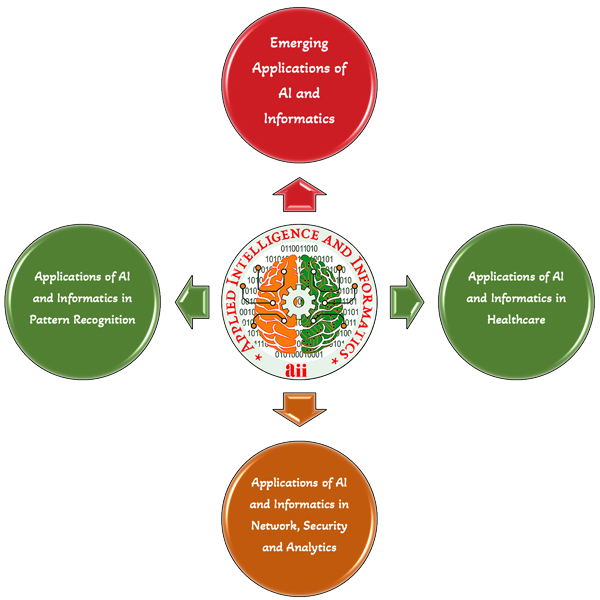
Relevant subject areas include but are not limited to:
- Track 1: Emerging Applications of AI and Informatics
- Track 2: Application of AI and Informatics in Healthcare
- Track 3: Application of AI and Informatics in Pattern Recognition
- Track 4: Application of AI and Informatics in Network, Security, and Analytics
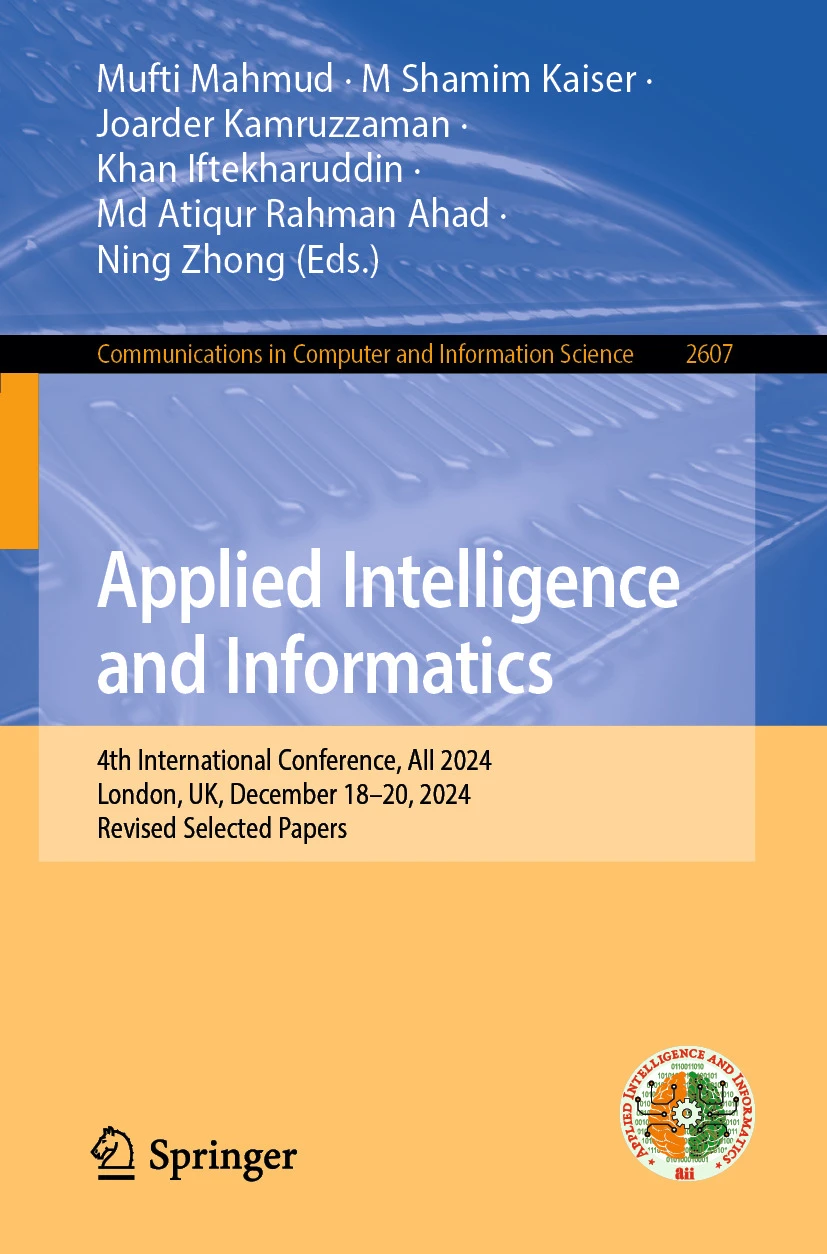
Publications
|
|
Timeline (Hard Deadlines. No Extensions.)
- Special Session proposal submission: 1st June 2026
- Workshop proposal submission: 1st June 2026
- Tutorial proposal submission: 31st July 2026
- Paper Submission (both Full and Short): 17th July 2026
- Paper Acceptance Notification: 7th August 2026
- Final Paper Submission & Accepted Paper Registration: 21st August 2026
- AII 2026 in London, UK: 21st – 23rd October 2026
Special Session, Tutorial & Workshop Proposal
- Proposal Submissions: AII 2026 will be hosting a series of special sessions, tutorials and workshops featuring topics relevant to the intelligence and informatics community on the latest research and industry applications. Special Session/ Tutorial/ Workshop proposals should be submitted by email to info@aii-conf.org and aii.conf.team@gmail.com. Proposal Guidelines: Each proposal should be concise with 1-3 pages and should include 1) special session/tutorial/workshop title; 2) length in hours; 3) names, main contact, and a short bios (150 words) of the organisers; 4) brief description of the scope and timeline; 5) prior history (if any); 6) potential program committee members and invited speakers (if available); 7) Any other relevant information.
- Papers and Presentations: A special session/tutorial/workshop is expected to be completed within 4 hours including breaks. Tutorials include a mix of invited presentations from academic or industrial experts, while special sessions/workshops include regular papers, short papers and invited papers. The paper submissions to workshops/special sessions follow the same format as well as the review process as the AII 2026 conference papers.
- Publications: Accepted workshop and special session full papers will be published at the same AII 2026 proceedings (subject to review process).
Paper Submission
-
Paper Submission:
- Full papers: submissions should be between 12 and 15 pages long including figures and references. Additional pages will be charged.
- Short papers: high quality papers between 6 and 11 pages are also welcome and will be accepted as short papers based on their originality, significance of contribution to the field, technical merit, and presentation quality.
- Note that the number of accepted short papers can only be at most 10% of the total accepted papers. Hence we encourage full paper submission.
Journal Opportunities: High quality AII conference papers may be nominated to submit an extended version for possible publication at a number of ISI and Scopus indexed journals.
- Paper Submission Site: https://cmt3.research.microsoft.com/AII2026
- Paper Format: All paper submissions MUST follow Springer LNCS Proceedings format.
- Microsoft Word template download from here: https://aii-conf.org/download/Author-template-Springer-LNCS.dotm
- For Latex template use this overleaf link: https://www.overleaf.com/latex/templates/springer-lecture-notes-in-computer-science/kzwwpvhwnvfj
- Questions and Suggestions: Concerning paper submissions, conference registrations, suggestions for the program, and other inquires, please feel free to contact AII 2026 chairs.
Sponsors
The AII 2026 conference is technically co-sponsored by:
- King Fahd University of Petroleum and Minerals, Saudi Arabia;
- University of East London, UK;
- Nottingham Trent University, UK;
- Applied Intelligence and Informatics Lab;
- International Neural Network Society;
- Web Intelligence Consortium






In partnership with:
 |
 |